
Kitchen Cleaning Mistakes Allen, TX Homeowners Should Avoid
Good intentions. Wrong habits. Most Allen, TX homeowners clean what they can see — and accidentally make the kitchen dirtier over time. This guide reveals the 15 most damaging mistakes and how to fix every single one.
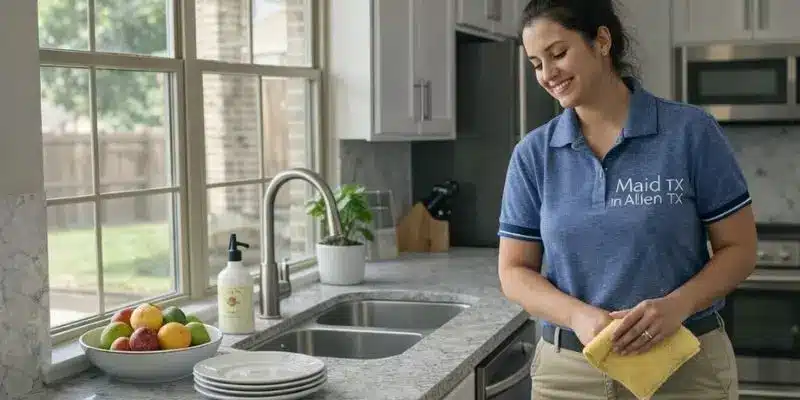
You Think You’re Cleaning.
You Might Be Making It Worse.
The kitchen is the heart of every Texas home — where meals happen, families gather, guests walk straight in, and life plays out. But it’s also one of the hardest rooms to truly clean, especially with heavy cooking, pets, kids, and North Texas hard water working against you.
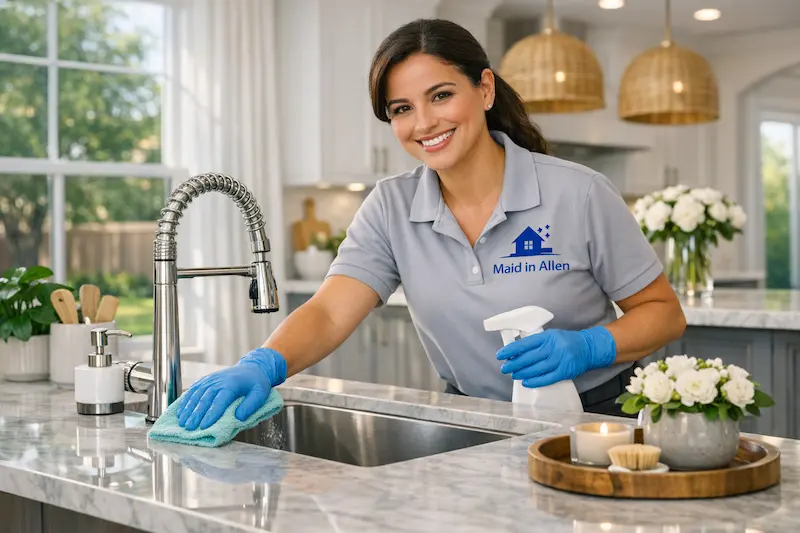
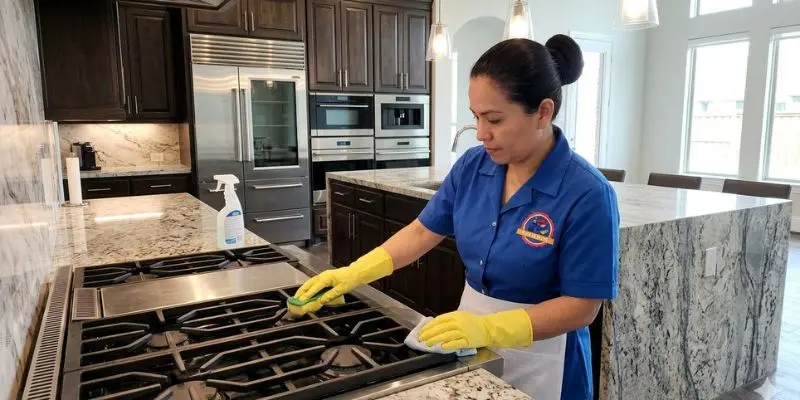
Signs Your Kitchen Cleaning Habits Are Working Against You
15 Kitchen Cleaning Mistakes
— And How to Fix Every One
Cleaning Counters Before Decluttering
This is the #1 reason kitchen cleaning takes twice as long as it should. When you wipe around items, you leave streaks, crumbs, and grease spots hiding under appliances and spice racks — and you’ll have to come back to them anyway.
- Wipe around the toaster and blender
- Clean only the visible counter space
- Leave spice racks and soap dispensers in place
- Remove every item from the counter first
- Wipe the full surface including corners
- Clean appliance bottoms before replacing
Using the Wrong Products on Countertop Surfaces
Many Allen homeowners are unknowingly etching, dulling, and damaging their countertops every single week. North Texas homes feature a wide range of surface materials — and each requires a different approach.
| Surface | ❌ Never Use | ✓ Use Instead |
|---|---|---|
| Granite & Natural Stone | Vinegar, bleach, citrus cleaners | pH-neutral stone-safe cleaner |
| Marble | Any acidic or abrasive product | Mild dish soap + warm water |
| Butcher Block | Harsh chemicals, soaking water | Warm water + dish soap, oil monthly |
| Stainless Steel | Paper towels (leave fibers & scratches) | Microfiber cloth + stainless polish |
| Laminate | Abrasive scrubbers, bleach | All-purpose spray + soft cloth |
| Porcelain Sinks | Steel wool, harsh abrasives | Baking soda paste + soft brush |
Ignoring Grease in Hidden Areas
Grease spreads everywhere when you cook — and most of it doesn’t land where you’re looking. In Texas kitchens where frying, BBQ prep, and sautéing are part of everyday cooking, hidden grease buildup becomes a significant problem within weeks.
- Under the microwave and above the stove
- Behind the stove and on side panels
- Cabinet handles and cabinet sides near the range
- Backsplash grout lines (traps grease permanently)
- Top of the refrigerator
- Apply a degreaser spray to all hidden zones weekly
- Wipe cabinet fronts near the stove after each meal
- Deep degrease backsplash grout monthly
- Add the stove sides and panels to your weekly list
Only Cleaning the Sink Basin
The kitchen sink is one of the dirtiest surfaces in the entire home. Most homeowners scrub the bowl and call it done — missing the areas where bacteria, mold, and mineral buildup actually live.
- Faucet handles and base (most-touched surface)
- Drain and garbage disposal opening
- Under and behind the faucet
- Sink rim and caulk lines
- Scrub drain cover and flush with baking soda + vinegar
- Disinfect faucet handles separately
- Clean behind and around the faucet base
- Freshen disposal with lemon + coarse salt
Forgetting Cabinet Handles & Light Switch Plates
These are statistically the dirtiest surfaces in the entire kitchen — touched dozens of times per day with food residue, oil, and grease on hands. Most homeowners wipe them down monthly at best, or never at all.
Cleaning the Floor First
The most classic cleaning mistake — and the one that wastes the most time. When you clean the floor first, everything you do after sends crumbs, residue, and pet hair right back down onto the clean surface.
The Professional Cleaning Order — Always Follow This
- Declutter and remove items from all surfaces
- Countertops — wipe top to bottom
- Appliances — exterior surfaces, handles, tops
- Cabinet fronts and handles
- Stove, range hood, and backsplash
- Sink — complete sink routine (see Mistake #4)
- Floors — always last, including under the stove area
Forgetting Fridge Gaskets & Door Seals
The rubber gaskets and door seals around your refrigerator are mold’s favorite hiding place. Dark, damp, rarely cleaned — food particles get trapped in the folds and mold establishes itself silently.
- Never cleaning the rubber door seals
- Wiping the outside of the fridge but not the gasket folds
- Ignoring the bottom seal near the floor (pet fur accumulates)
- Wipe gaskets with diluted vinegar or mild cleaner
- Dry thoroughly — moisture causes mold to return
- Leave fridge door open 10 min to air dry after cleaning
Never Cleaning the Dishwasher
A dirty dishwasher makes your “clean” dishes smell like old food. The filter traps food particles, the rubber edges accumulate grime, and the spray arms get blocked — reducing cleaning effectiveness over time.
- Cleaning the dishwasher filter
- Wiping the rubber door seal
- Running a cleaning cycle monthly
- Remove and rinse the filter under warm water
- Wipe rubber edges and door interior
- Run an empty vinegar cycle (top rack) monthly
- Clean spray arm holes with a toothpick if clogged
Not Replacing or Sanitizing Sponges
Kitchen sponges are one of the most bacteria-dense objects in the average home — more contaminated than toilet seats or doorknobs. Using a sponge past 1–2 weeks is spreading bacteria across every surface you touch with it.
- Using the same sponge for weeks or months
- Leaving wet sponges on the sink edge to “dry”
- Using one sponge for dishes, counters, and stove
- Microwave a damp sponge for 1 minute daily to kill bacteria
- Replace sponges every 1–2 weeks
- Switch to color-coded microfiber cloths — more hygienic and washable
- Never use the same cloth on raw meat areas and then counters
Scrubbing Instead of Pre-Soaking
Scrubbing hardened grease, burned residue, or dried soap scum without pre-soaking is one of the biggest time-wasters in kitchen cleaning. The chemistry of a pre-soak does the heavy work — your job is just to wipe.
- Spray and immediately scrub hard
- Use excessive force on baked-on residue
- Give up and leave it for “later”
- Apply degreaser or baking soda paste and wait 5–10 min
- Cover with a damp cloth to keep solution active
- Wipe away — minimal scrubbing needed
- For stovetop grates, soak overnight in hot soapy water
Ignoring Walls, Backsplash & Above Cabinets
Cooking splatters travel much farther than most people realize. The wall behind the stove, the backsplash grout, the underside of upper cabinets, and the top of the refrigerator all collect grease — and are almost never cleaned.
- Walls behind and beside the stove
- Backsplash grout (traps grease permanently)
- Underneath upper cabinet edges
- Top of the refrigerator (dust + grease layer)
- Wipe walls behind stove after heavy cooking sessions
- Degrease backsplash grout monthly with a brush
- Wipe top of fridge monthly — use a microfiber duster first
Ignoring the Range Hood Filter
Texas kitchens produce a lot of grease vapor from BBQ, frying, and sautéing. The range hood filter captures it all — and most filters haven’t been cleaned in months or years. A clogged filter recirculates grease back into your kitchen air.
- Cleaning the range hood filter
- Vacuuming the vent grille
- Wiping the range hood exterior
- Remove metal filter and soak in boiling water + dish soap
- Scrub with a brush, rinse, dry before replacing
- Vacuum vent grille with brush attachment
- Wipe hood exterior with degreaser
Using Dirty Towels to Clean
Wiping kitchen surfaces with a damp cloth that was used yesterday — or last week — spreads bacteria rather than removing it. The surface looks wiped, but you’re actually leaving a thin layer of redistributed grime.
- Reusing the same kitchen towel for 3–5 days
- Using the dish rag to wipe counters too
- One cloth for all surfaces including pet areas
- Wash kitchen cloths daily or every other day
- Use color-coded microfiber cloths for different zones
- Dedicated cloth for pet feeding area — never cross-use
Skipping Hard Water Maintenance
Allen, TX sits in one of the hardest water zones in North Texas. Mineral deposits on sinks, faucets, and the dishwasher interior build up every single week. Most homeowners address them only when they’re already badly calcified — which requires much more effort and sometimes professional tools.
- Letting deposits harden for weeks or months
- Using vinegar on stone surfaces to remove them (etches permanently)
- Scrubbing without the right descaling product
- Wipe faucets and sink basin dry after use — stops deposits forming
- Use a dedicated hard water/lime remover on non-stone surfaces
- For stone surfaces, use only a pH-neutral stone-safe cleaner
- Address spots weekly before they harden
Spraying Cleaner Directly on Surfaces
Spraying cleaning products directly onto cabinet doors, painted walls, appliance screens, or near electrical areas can cause streaking, product buildup, surface damage, and in some cases electronic damage over time.
- Spraying directly on painted cabinet doors
- Spraying near appliance control panels and screens
- Oversaturating wood or laminate surfaces
- Spray onto the cloth, not the surface
- Use minimal product — enough to dampen, not saturate
- Dry surfaces immediately after wiping
Kitchen Cleaning Mistakes —
Questions Allen Homeowners Ask
Ready for a Kitchen That
Stays Actually Clean?
Fast, friendly quotes from a trusted Allen cleaning team. No contracts, no pressure — just a cleaner home.
Get a Free Cleaning Quote
Fast, friendly quotes · No contracts · No pressure
Prefer to call or text?
(214) 317-1867