
How to Clean Baseboards With Pet Hair, Step by Step
Vacuum the gap where the baseboard meets the floor first, brush the flat face, then wipe with a barely damp microfiber cloth and finish dry. Dry first, damp second keeps fur from smearing into the paint.
Dogs, kids and a full calendar? Keep baseboards hair-free on a schedule, not on your weekend to-do list.
- Same team every visit
- No contracts
- No pet surcharge
Last updated: November 9, 2026
To clean baseboards with pet hair, vacuum the baseboard-floor gap with a crevice tool, brush the flat face, wipe with a barely damp microfiber cloth, dry it, and finish with a dryer sheet. In pet homes in Allen, Plano or McKinney, vacuum the gap every two weeks and wipe the full length about once a month.
With a dog or cat in the house, fur slides along the floor and stops at the wall, so baseboards look fuzzy days after you clean them. This guide gives you the tools, the order and a schedule that keeps the job small. For more pet guides, browse our pet hair and pet dander articles.
In this guide
- Why Pet Hair Collects on Baseboards
- Best Tools for Removing Pet Hair From Baseboards
- Step-by-Step: How to Remove Dog Hair From Baseboards
- How to Clean Painted Baseboards Without Damage
- Removing Stuck-On Grime and Greasy Marks
- How Often to Clean Baseboards With Pets
- Booking Help for a Pet-Friendly Home in Allen
- Frequently asked questions
Why Pet Hair Collects on Baseboards
Pet hair settles on baseboards for a simple reason: baseboards sit at the lowest point of the room, where loose fur drifts, gets pushed by air currents, and collects. Learning how to clean baseboards with pet hair starts with understanding that dog and cat hair, plus pet dander, slide along the floor and stop at the wall.
This happens faster in North Dallas, Texas. Air conditioning runs for long stretches here, and that moves dust and fur through the air returns and onto low surfaces.
- Loose hair lands on the top edge and in the gap where the baseboard meets the floor.
- Dander and fine dust cling to the painted surface and build up over time.
- Static makes hair grab onto baseboards, so it does not blow off easily.
If you clean baseboards only when they look bad, the buildup has already spread to the floor edges. A quick pass on a regular schedule keeps the work small.
Best Tools for Removing Pet Hair From Baseboards
The right tool depends on two things: the shape of the baseboard and the finish on it. A flat, painted baseboard takes a different approach than a profiled, stained one.

Dry removal, tight reach and a final wipe. Nothing here is harsh enough to scratch painted trim.
- Keep two microfiber cloths: one dry, one damp.
- One drop of dish soap is enough; more leaves a film that attracts hair.
- Vacuum with a crevice tool and a soft brush attachment. The crevice tool pulls fur out of the baseboard-floor gap; the brush attachment lifts hair off the flat face without dragging. Use the brush on painted trim, the crevice tool in the gap.
- Microfiber cloth. It traps hair and fine dust better than paper towels because the fibers grab instead of push.
- Dryer sheet. Rubbing a dryer sheet along the baseboard picks up loose hair and cuts static so new fur stops clinging. Use it last, on a dry surface.
- Soft broom or dust mop. Sweep the floor along the wall first so loose hair does not get pushed back onto the baseboard.
- Mild dish soap. A drop in warm water handles greasy marks and stuck-on dirt.
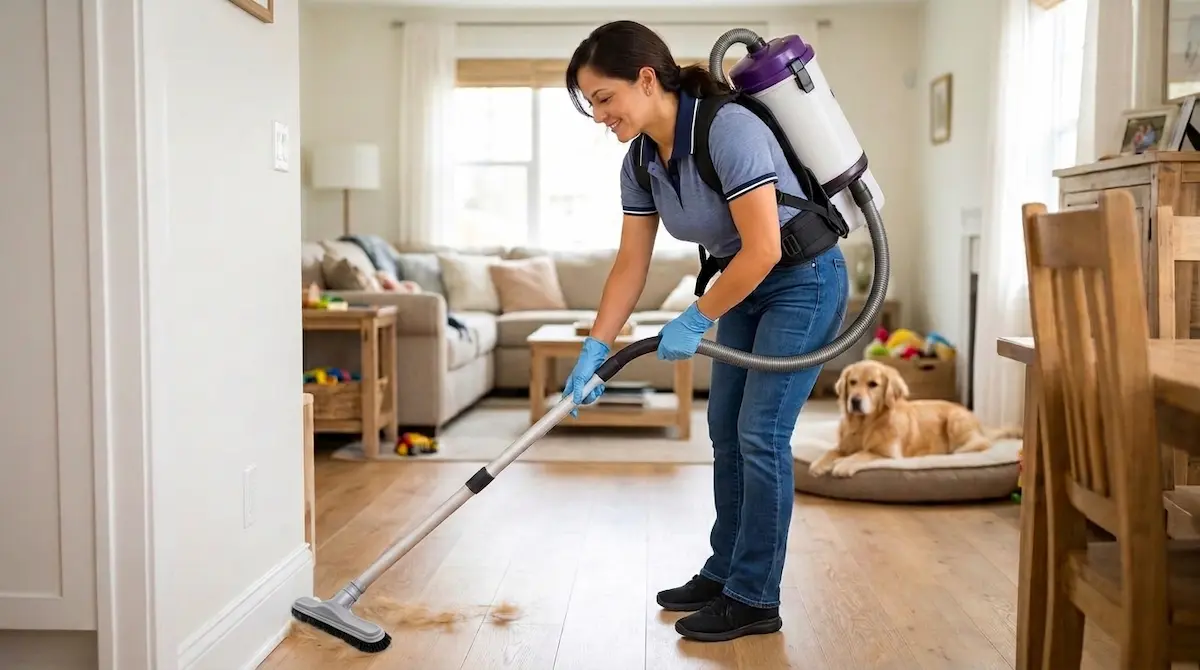
A vacuum with HEPA media filtration helps keep the fine dander you lift from blowing back into the room. Our team uses ProTeam backpack vacuums with HEPA media filtration for this reason.
Match the Tool to the Baseboard

A flat cloth glides over ridges and leaves fur behind. A soft brush attachment reaches into each groove without scratching the paint.
- Run the brush along one groove at a time.
- Wipe only after the grooves are clear.
| Baseboard type | Best tool | Key caution |
|---|---|---|
| Flat painted | Vacuum brush attachment, then damp microfiber | Skip abrasive pads; they dull the paint |
| Profiled or ridged | Crevice tool along grooves, then soft brush | A flat cloth leaves hair in the ridges |
| Stained or sealed wood | Dry microfiber, then a barely damp cloth | Dry right away; standing water dulls the finish |
| Laminate or vinyl | Slightly damp cloth | Skip the dryer sheet if glossy; residue streaks |
Step-by-Step: How to Remove Dog Hair From Baseboards
The order matters more than the products. Work dry first, then damp, and finish dry again. That sequence lifts the bulk of the fur before any moisture touches the trim, so you are not smearing hair into the paint.
- Move the pet and the pet gear. Put the dog or cat in another room and pick up beds, bowls, and toys from the wall line. Hair hides under them, and a curious pet will walk through a damp baseboard.
- Sweep the floor along the wall. A soft broom or dust mop moves loose hair away from the baseboard so the vacuum does not push it back into the gap.
- Vacuum the baseboard-floor junction with the crevice tool. Run it slowly along the full length of the wall, then go back over corners and the spots where your pet sleeps or sits.
- Vacuum the flat face with the brush attachment. This lifts the surface hair the crevice tool could not reach.
- Wipe with a dry microfiber cloth. Fold it into a flat pad and turn to a clean side often so you do not spread dust back onto the wall.
- Wipe again with a barely damp cloth and a drop of dish soap. Only where there is grime. Dry immediately with a clean cloth.
- Finish with a dryer sheet on a dry surface. A light pass along the length keeps new hair from sticking right away.
Vacuum the Baseboard-Floor Junction First

It is the step most people skip. Vacuum it before you wipe anything, or the cloth only pushes fur around the edge.
- Move slowly; a fast pass leaves hair behind.
- Go back over corners and the spots where your pet sleeps.
Vacuuming first removes the bulk of the fur so the cloth has less to do.
Wipe With a Lightly Damp Microfiber Cloth
Once the loose hair is gone, wipe the baseboard with a microfiber cloth that is only damp, not wet. Too much water can soak into the wood or drywall at the base of the wall.
Fold the cloth into a flat pad and run it along the surface in one steady pass. For stuck-on marks, let the damp cloth sit on the spot for a few seconds, then wipe again. Repeated light passes work better than one hard scrub.
Keep Pets Clear of Wet Surfaces
A damp baseboard and a wet floor edge are the two places a pet will investigate first. Keep the animal out of the room until the trim is dry to the touch, and put water bowls back only after the floor edge has dried.
Two pets and a full calendar? Bi-weekly plans include baseboards, ceiling fans and air-return vents.
See Bi-Weekly PlansHow to Clean Painted Baseboards Without Damage
Painted baseboards need gentle care. Harsh scrubbing wears the finish and can leave dull patches.
- Test first. Try your cleaning solution on a small hidden spot before you clean the whole wall.
- Use mild soap only. A drop of dish soap in warm water is enough for most pet hair buildup.
- Avoid soaking. Wipe quickly and dry the surface right after.
- Skip abrasive pads. They scratch paint and make future dirt stick more easily.
A common mistake is using too much product. Extra soap can leave a film that attracts more hair. Rinse your cloth often and wring it out well.
Removing Stuck-On Grime and Greasy Marks
Some marks will not lift with a dry cloth. These usually come from hands, paws, or kitchen grease that drifted down the wall.
- Wipe with a damp microfiber cloth and mild dish soap.
- Let the cloth rest on the mark for a few seconds to loosen it.
- Use a soft brush on textured baseboards where grime sits in grooves.
- Dry the spot to avoid streaks.
If a mark stays, stop before you rub harder. Repeated aggressive scrubbing can remove the paint. If you try a stronger cleaner, test it on a hidden area first.
How Often to Clean Baseboards With Pets
With pets, most homes do best with a light clean every two to four weeks and a full baseboard wipe about once a month. Homes with heavy shedders may need the full routine more often.
| How often | What to do |
|---|---|
| Weekly | Sweep and vacuum the floor edges where hair gathers |
| Every two weeks | Vacuum the baseboard junction with a crevice tool |
| Monthly | Wipe the full length of each baseboard with a damp cloth |
Booking Help for a Pet-Friendly Home in Allen
If you want baseboards handled on a set schedule, our team can help. We use ProTeam backpack vacuums with HEPA media filtration and EPA Safer Choice products, and our pet-friendly house cleaning in Allen is built for homes with dogs and cats. Plans start at $120 per visit for homes under 1,000 sq ft. Larger homes get a custom quote.
See how pricing works for Allen homes, then get a quote for yours.
- Same team every visit
- No contracts, no pet surcharge
- Serving Allen, Plano, and McKinney since 2009
The Bottom Line
Pet hair on baseboards builds up at the floor edge, so vacuum the junction first, then wipe with a barely damp microfiber cloth and finish dry. Repeat every two to four weeks and the job stays small. Maid in Allen TX has served Allen, Plano, McKinney, Frisco and Fairview since 2009, with the same team every visit and no pet surcharge.
Keep Reading
Frequently Asked Questions
How do you clean baseboards with pet hair?
Vacuum the baseboard-floor junction with a crevice tool so loose hair does not spread, then brush the flat face. Wipe with a lightly damp microfiber cloth, working top to bottom, and dry right away. A dryer sheet or a rubber glove pulls fur caught in paint texture before the final wipe. Work room by room and rinse the cloth often.
What are the best tools for removing pet hair from baseboards?
A vacuum with a crevice tool or soft brush attachment handles most loose fur quickly. A microfiber cloth lifts fine dust and hair without leaving lint, a dry broom clears the floor first, and dryer sheets grab static-clinging hair. Narrow or ornate trim needs a smaller head than flat, modern boards.
How often should you clean baseboards if you have pets?
Homes with dogs or cats generally benefit from vacuuming the baseboard junction every two weeks and a full wipe about once a month. Heavy shedders, or pets that spend a lot of time on the floor, may need attention more often. Our bi-weekly plans include baseboards.
How do I clean painted baseboards without damaging the paint?
Use warm water with a small amount of mild dish soap and a soft microfiber cloth. Wring the cloth until it is only lightly damp, then wipe gently. Avoid scrubbing pads and abrasive powders, which dull or scratch paint. Dry with a clean cloth, and test any cleaner on a hidden spot first.